


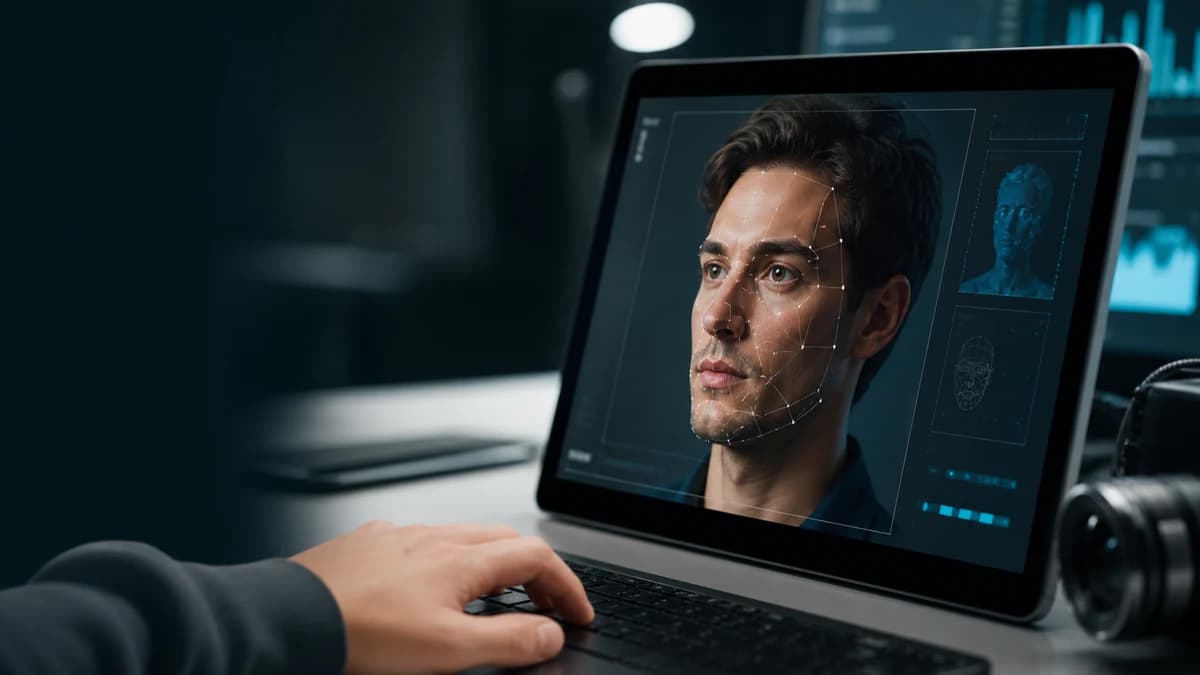
What face age AI is actually measuring
Face age AI tools estimate apparent age: how old a face looks in a specific image. They do not read your birthday, verify your identity, or measure your biological age directly.
That distinction matters because face age is a visual estimate. The number reflects what the model sees in the uploaded photo, not a permanent truth about you.
How AI face age estimation works
A typical face age AI flow starts by detecting a visible face, then looking for visual patterns often linked to age perception. These can include under-eye detail, skin texture, facial contrast, mouth and jaw definition, and overall facial fullness.
The model only sees the image pixels. If the photo is blurry, filtered, low light, or taken too close to the camera, the apparent age estimate can move because the visible cues changed first.
- Clear single-face portraits usually work better than group photos.
- Eye-level framing is steadier than extreme selfie angles.
- Even daylight often gives a more stable result than harsh indoor light.
- Recent unedited photos are more useful than old screenshots or compressed social media images.
Why face age results can change so much
People are often surprised when one face age app says 27 and another says 34. In practice, this is common. Apparent age changes with expression, smile lines, lighting, lens distance, makeup, skin dryness, and image compression.
Research collected for this project also shows that sleep, UV exposure, stress, and facial volume changes can influence how old a face appears. AI tools react to those visible effects, even when they are temporary.
What usually makes a face read older in AI
Older-looking results often come from a mix of photography and genuine visible cues. Dark circles, hard shadows, dull skin, low facial contrast, and a tired expression can all push an estimate upward.
A close front camera can also distort face proportions and make the lower face look heavier or less balanced. That is one reason a casual selfie can look older than a cleaner portrait.
- Under-eye shadows or puffiness.
- Ceiling light or strong side light.
- Low-resolution uploads and heavy compression.
- Beauty filters that smooth some details and exaggerate others.
How to get a cleaner face age AI test
Use a recent portrait with one face clearly visible, keep the camera near eye level, and face a soft light source like a window. Avoid strong filters, screenshots, and images where the face is small in frame.
The better method is to test two or three controlled photos and compare the range. If the estimates cluster together, that range is usually more informative than any single result.
- Start with a neutral daylight portrait.
- Compare with one natural smiling photo.
- Use a second clear indoor photo if you want a wider check.
- Interpret the pattern across results, not only the lowest number.
Face age AI versus age verification or health claims
Face age estimation is not the same as formal age verification. Consumer tools are designed to guess how old someone looks, while verification systems are built around threshold decisions and compliance rules.
It is also not the same as a health diagnosis. A face age calculator can reflect visible cues in a photo, but it cannot determine your real health status, medical risk, or true biological age from one casual upload.
How to use face age results in a useful way
The most practical use of face age AI is comparison. It can help you see why one portrait looks fresher than another, choose stronger profile photos, or understand which lighting and angles work best for you.
It is less useful as a final judgment. Treat the result as a photo-reading tool, not as a statement about your worth, attractiveness, or real age.
Try face age AIUpload a clear portrait and compare a few photos to see how stable your apparent age looks.Quick answers
What does face age mean?
Face age usually means apparent age: how old a face looks in a photo to an observer or AI model.
Is face age AI the same as my real age?
No. It is a visual estimate from the uploaded image, not your chronological or verified age.
Why does face age estimation change between photos?
Lighting, expression, blur, camera angle, filters, and image quality all change the visible cues the AI uses.
What photo works best for an AI face age calculator?
Use a recent, clear, single-face portrait with even light, minimal editing, and an eye-level camera angle.
Can face age AI verify if someone is over 18?
No. Apparent age estimation is different from formal age verification and should not be used as proof of age.
Should I trust one surprising face age result?
Not by itself. Compare multiple clean photos first and look for a stable range.