
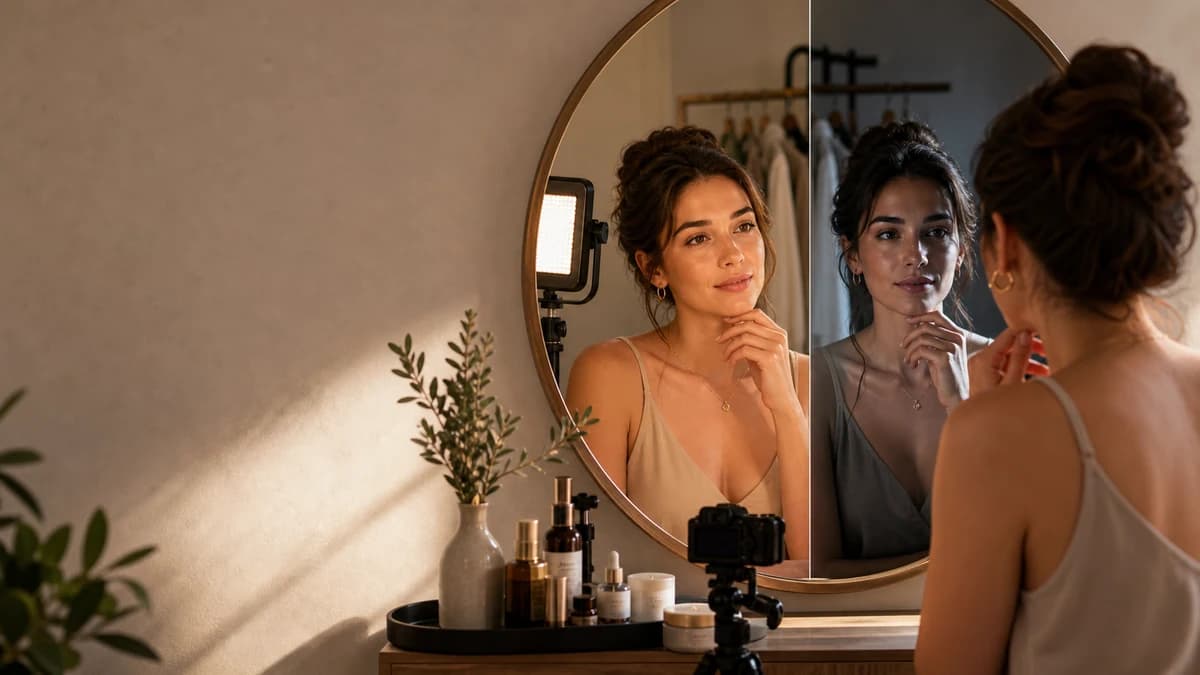
Why photos change how old you appear
When people ask do I look old or do I look my age, the answer often depends on the photo. Lighting, lens distance, posture, expression, grooming, sleep, and image editing can all influence perceived age.
AI face age tools respond to those same visible cues. A photo can make you look younger or older even when nothing about your actual age has changed.
How to look younger in a photo
If you want to know how to look younger in a photo, start with soft even lighting. Face a window, avoid harsh overhead shadows, and keep the camera near eye level. A relaxed expression also helps.
Avoid extreme smoothing filters if you plan to use an AI age detector. They may make the image look unnatural and can produce unpredictable results.
- Use soft front light instead of harsh side light.
- Keep the camera at eye level or slightly above.
- Choose a natural expression.
- Avoid blur, low resolution, and heavy retouching.
How to make yourself look older in a photo
If you are wondering how do I make myself look older, the opposite conditions often work: harsher shadows, a lower camera angle, sharper contrast, serious expression, and less smoothing. Styling choices like facial hair, glasses, clothing, and posture can also change perception.
This does not mean the result is your real age. It means the photo is emphasizing cues that people and AI models often associate with maturity.
How to judge whether you look your age
To judge whether you look your age, compare several simple photos instead of relying on one dramatic selfie. Use clear portraits with similar lighting and expression, then look at the range of apparent age results.
If one result says you look much older, inspect the photo. Often the cause is tired lighting, camera distortion, glare, or an expression that changed the visible face shape.
Lifestyle cues that show up in photos
Some apparent age cues are temporary. Poor sleep can make the eyes look heavier, the skin duller, and under-eye circles darker. Stress can show up through tense facial muscles, frowning, jaw clenching, posture, and a tired expression. These do not prove anything about your actual age, but they can affect a photo age estimate.
Other cues build over time. UV exposure is strongly linked with visible photoaging such as uneven pigmentation, texture, wrinkles, and loss of elasticity. Facial volume changes can also matter: some people look older after rapid weight loss because the midface looks less full, while others look younger when posture, grooming, and lighting improve.
Styling choices that shift perceived age
Hair, makeup, facial hair, glasses, clothing, and posture can all change how old a person appears. Gray hair can add perceived age even when the face looks young. A beard may make a younger face look more mature. Makeup can smooth the look of skin tone and increase facial contrast, but on very young faces it may also signal adulthood and make the person look older.
The practical lesson is simple: decide what you want the photo to communicate. For a fresher portrait, use clean light, neat grooming, relaxed posture, and natural contrast. For a more mature portrait, stronger styling, sharper contrast, and a more serious expression may shift the impression.
- Looking younger: soft light, relaxed expression, clean background, natural contrast.
- Looking older: sharper contrast, lower angle, serious expression, mature styling.
- Looking accurate: neutral light, eye-level camera, minimal editing, current grooming.
- Looking inconsistent: mixed filters, old photos, harsh shadows, and extreme angles.
Do not turn a photo result into self-criticism
A surprising AI result can feel personal, especially if you are already worried about looking tired, older, or less like yourself. But the model is not evaluating your worth, health, attractiveness, or identity. It is estimating a number from visible pixels.
If a result bothers you, retest with a calmer photo setup: daylight, eye-level framing, and a neutral expression. If the number changes, the first photo was doing a lot of the work.
Quick answers
Can lighting make me look older?
Yes. Harsh shadows and strong contrast can emphasize texture and lines, which may increase apparent age.
Can I look younger without editing the photo?
Often yes. Better lighting, camera level, posture, and expression can make a portrait look fresher without filters.
Does an AI result prove I look old?
No. It is one estimate from one image. Try another clear photo before taking the number seriously.
Can sleep affect how old I look in photos?
Yes. Tired eyes, duller skin, darker circles, and a tense expression can make a photo read older.
Does makeup make people look younger?
It depends on age, style, and photo conditions. Makeup can smooth tone and increase facial contrast, but heavy styling can also make a young face look more adult.
Can sun exposure change apparent age?
Over time, UV exposure can contribute to visible photoaging such as uneven pigmentation, texture, and wrinkles, which may affect apparent age.